The Role of Fashion in Pop Music: Exhibition Highlights
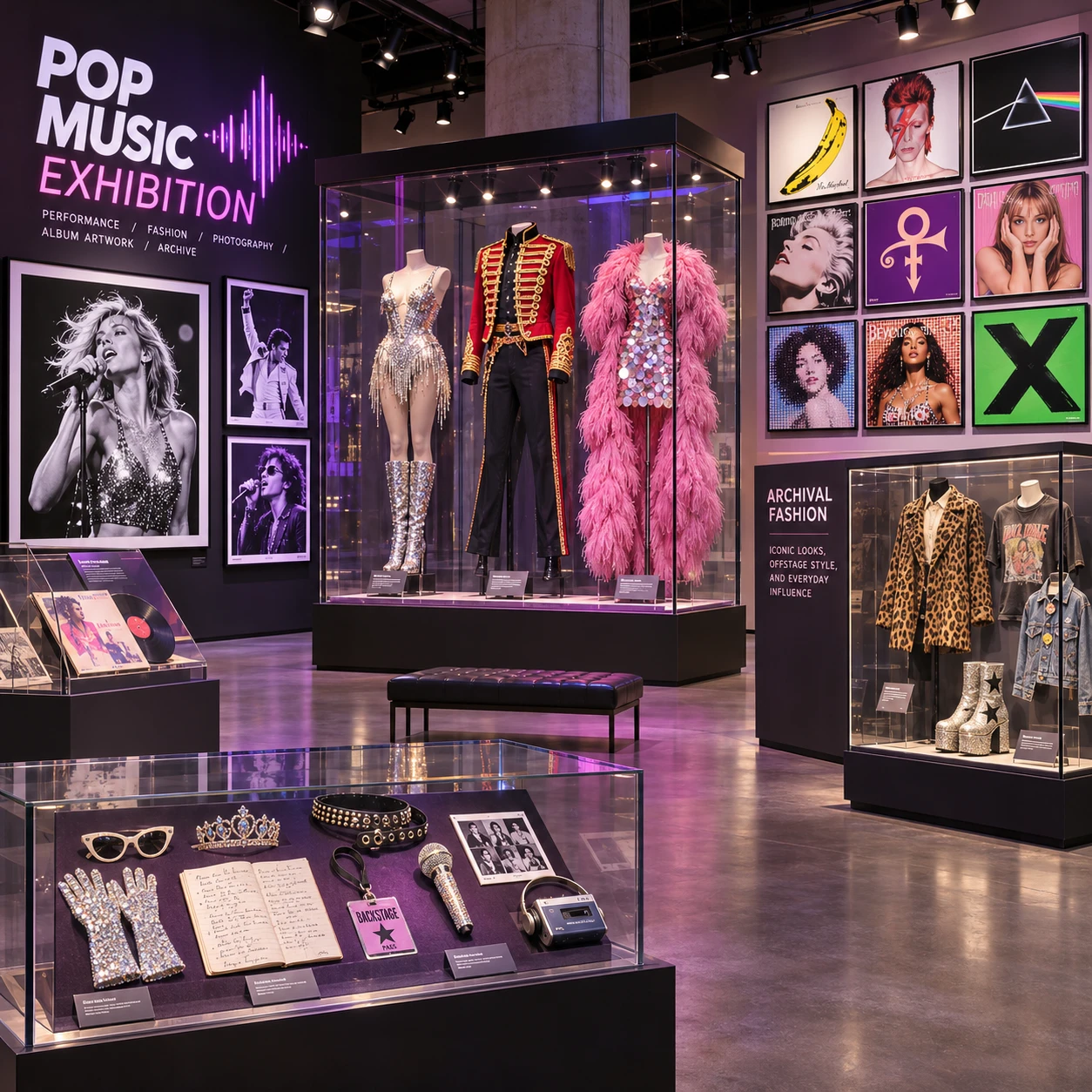
Fashion gives pop music a visible language. A silhouette, color, or carefully chosen accessory can suggest an artist’s identity before a note is sung, while a costume onstage can turn a performance into a lasting image. In a pop music exhibition, garments and photographs offer more than a look at what performers wore: they show how music creates visual worlds and how audiences make those worlds their own.
Exhibition highlights can connect stagewear to movement, music videos to storytelling, and fan style to wider subcultures. Looking closely at those connections helps visitors understand fashion as part of pop history, rather than decoration around it.
Why Fashion Matters in Pop Music
Fashion matters in pop music because clothing helps artists communicate identity, mood, and public image. A distinctive look gives audiences a visual point of recognition and can make a musical era feel like a complete creative statement.
Costume can signal reinvention, confidence, vulnerability, rebellion, or play. It also gives artists a way to shape how they appear in public, from the stage and music video to album covers and promotional photography. The clothes do not explain a song on their own, but they can guide how listeners interpret it.
For an exhibition visitor, context is the key. A garment displayed beside a photograph or a recording of the performance may reveal how it was meant to move, catch the light, or contribute to an artist’s image. The same piece viewed without that context can seem like an isolated fashion object.
Pop style also responds to its moment. Artists draw on streetwear, glamour, tailoring, club scenes, and other visual languages, then reshape those references for a public audience. That exchange can challenge expectations about gender, identity, and celebrity, though its meaning depends on who is wearing the look and how audiences receive it.
Stagewear That Becomes Part of the Performance
Stagewear contributes to a live performance by shaping its spectacle, supporting movement, and helping create memorable moments. A costume can make choreography easier to read from a distance or give a song a visual signature.
Unlike clothing designed only for a still image, performance costumes must work under practical conditions. They may need to accommodate dancing, quick changes, lighting, and the demands of a long show. A striking outfit can help build an artist’s stage presence, but a design that restricts movement or distracts from the performance has a cost.
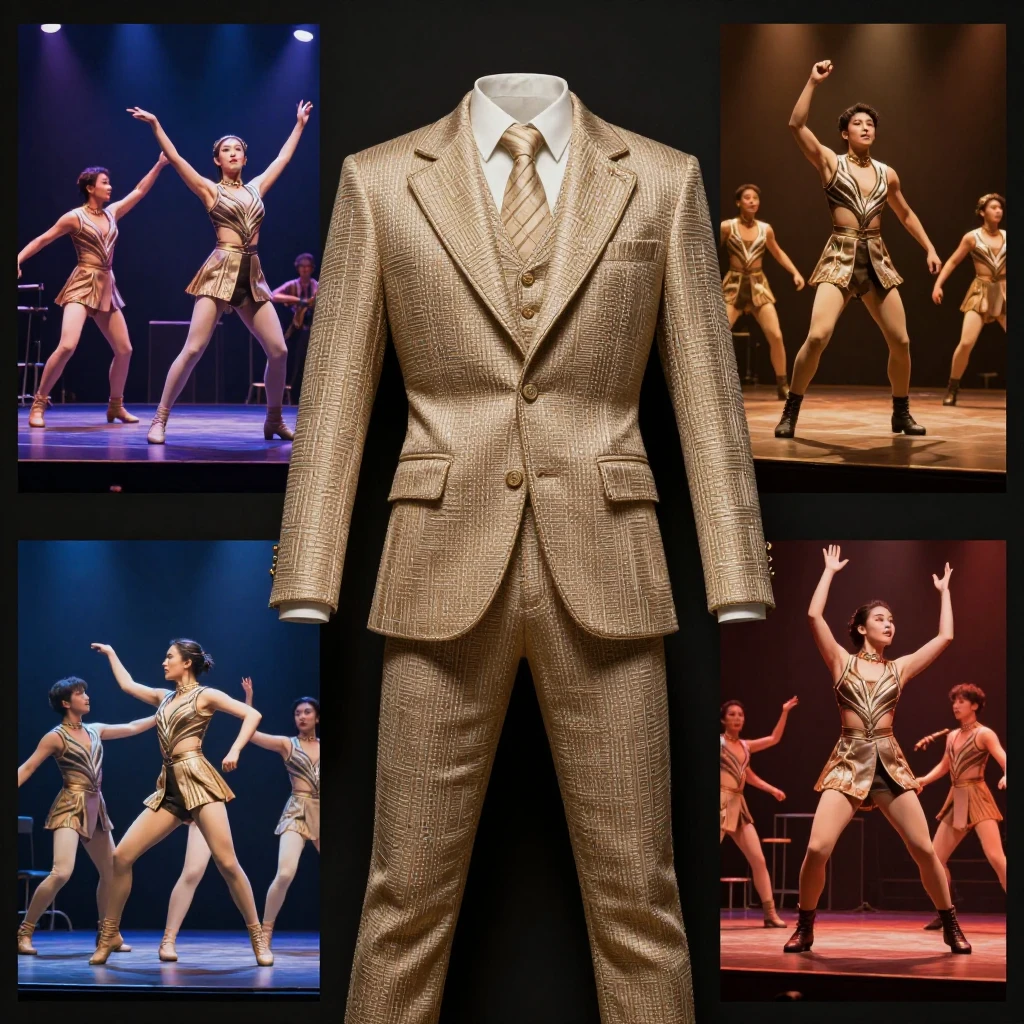
That tension makes stagewear especially revealing in an exhibition. Look for signs of use: closures chosen for fast changes, reinforced seams, worn surfaces, or details that appear brighter under stage lights. Where available, video or stage photography can show how the garment functioned in motion, rather than leaving visitors to imagine the full performance.
Costumes can also become markers of a specific concert or career moment. Their cultural meaning grows through repetition: audiences see the look, remember the performance, and connect the two. The exhibit’s strongest story may therefore come from pairing the object with evidence of how it was worn and seen.
From Music Videos to Album Covers
Fashion helps music videos and album covers create visual worlds that audiences associate with songs, releases, and entire eras. Clothing links sound to image, giving viewers a memorable way into a track’s mood or story.
A music video can use costume changes, color, and styling to establish character or signal a shift in tone. Because viewers encounter the look alongside the song, the two can become inseparable in public memory. Promotional photography extends that visual language across posters, press materials, and magazines.
Album covers work differently. They compress an artist’s image into a single frame, often asking clothing, pose, and setting to carry meaning at a glance. A fashion detail that seems small in person may dominate a cover’s composition or become a reference point for fans.
In a pop music exhibition, compare images from the same release. Ask what changes between a studio portrait, a video still, and a live photograph: the styling may stay consistent, or each medium may reveal a different side of the artist. This comparison helps visitors see visual identity as a deliberate process, not simply a collection of outfits.
Artists, Designers, and Style Collaborations
Fashion collaborations bring artists and designers together to create clothing that serves both a musical vision and a design language. These partnerships can expand an artist’s image, while giving a designer’s work a highly visible stage.
The collaboration may involve a custom performance costume, a tour wardrobe, or a broader exchange of ideas. Designers can translate a performer’s needs into materials and shapes that work under lights and in motion. Artists, in turn, bring character and context to the design. The result depends on the fit between the creative vision and the practical demands of performance.
Exhibition displays can make that process easier to understand when they include sketches, photographs, notes, or multiple versions of a garment. Such materials show how an idea changed during production and help distinguish a designed look from an outfit chosen off the rack. They also remind visitors that a famous image may involve stylists, makers, photographers, and creative teams as well as the performer.
These partnerships can blur boundaries between music and fashion, but not every collaboration becomes culturally significant. A useful exhibition asks what the partnership contributed: Did it solve a performance challenge, define an artist’s public image, or influence how fans saw a particular musical moment?
Fans, Subcultures, and Lasting Influence
Pop stars influence fashion trends when audiences adopt, adapt, or respond to the looks they see in performances and media. Fans help carry an artist’s visual identity beyond the stage, linking clothing to community and shared musical taste.
That influence rarely travels in one direction. Artists may borrow from subcultures and style movements, while fans reinterpret those references through local scenes, budgets, and personal taste. A look can become a sign of belonging, a tribute, or a playful transformation rather than a precise copy.
Fan culture makes the relationship especially visible at concerts, fan gatherings, and online. Replicated outfits and handmade details can turn a performance into a shared visual event. An exhibition that includes fan-made material, audience photography, or examples of street style can show how listeners actively shape pop music’s cultural influence.
It is also worth looking at whose style receives recognition. When an artist’s image draws on a subculture, the display can prompt questions about credit, appropriation, and the communities behind the look. That context adds depth without reducing fashion to a simple story of a star setting a trend.
What to Look for in a Pop Music Fashion Exhibition
To read a pop music fashion exhibition, connect each garment to its maker, performance, image, and audience. That approach turns a display of objects into a story about how music and style shaped one another.
Try this four-part viewing method: object, use, image, audience. First, notice the garment’s material, cut, and construction. Next, ask how it worked in performance. Then compare it with related music videos, album covers, or promotional photography. Finally, consider how fans or wider style movements responded.
- Look for context: Captions, dates, and photographs can identify the musical era or event connected to an item.
- Notice practical details: Fastenings, repairs, and wear may hint at movement, quick changes, or repeated use.
- Compare media: A stage costume may appear different in a video still, a cover image, or a candid photograph.
- Ask whose story is present: Check whether the display recognizes designers, craftspeople, collaborators, and fans.
A common trap is treating a displayed garment as self-explanatory. Without performance or historical context, visitors can miss why it mattered. Another is assuming one artist single-handedly created a look; production often involves a wider team. Reading labels and comparing images helps avoid both shortcuts.
The most useful exhibition highlights leave room for interpretation. They show the object, but also provide enough evidence to connect it to sound, movement, identity, and audience response.
Frequently Asked Questions
These answers explain what visitors may encounter and how fashion connects to pop music’s performances, images, and audiences.
What kinds of fashion artifacts might a pop music exhibition display?
A pop music exhibition might display stagewear, performance costumes, accessories, design sketches, music video wardrobe, album-cover outfits, and promotional photographs. The objects on view vary by exhibition; context such as dates, captions, and archival images helps explain how each item relates to an artist or musical moment.
How does stagewear affect a live performance?
Stagewear shapes what audiences see and can support movement, choreography, and a performance’s visual mood. It also has to meet practical needs, including comfort, lighting, and quick changes. A costume is effective when it contributes to the show without getting in the performer’s way.
How do pop stars influence fashion trends?
Pop stars bring clothing into view through concerts, music videos, photography, and public appearances. Fans may adopt or reinterpret those looks, while designers and media help circulate them. Influence is a two-way exchange: artists often draw on existing subcultures and fashion movements, too.
Why are music videos and album covers important to fashion history?
Music videos and album covers document how clothing helped artists build visual identities around songs and releases. They preserve styling choices alongside music, making it possible to trace how an image reached audiences and became linked to a particular era or cultural moment.