Memorabilia Spotlight: Rare Items from Michael Jackson’s Career
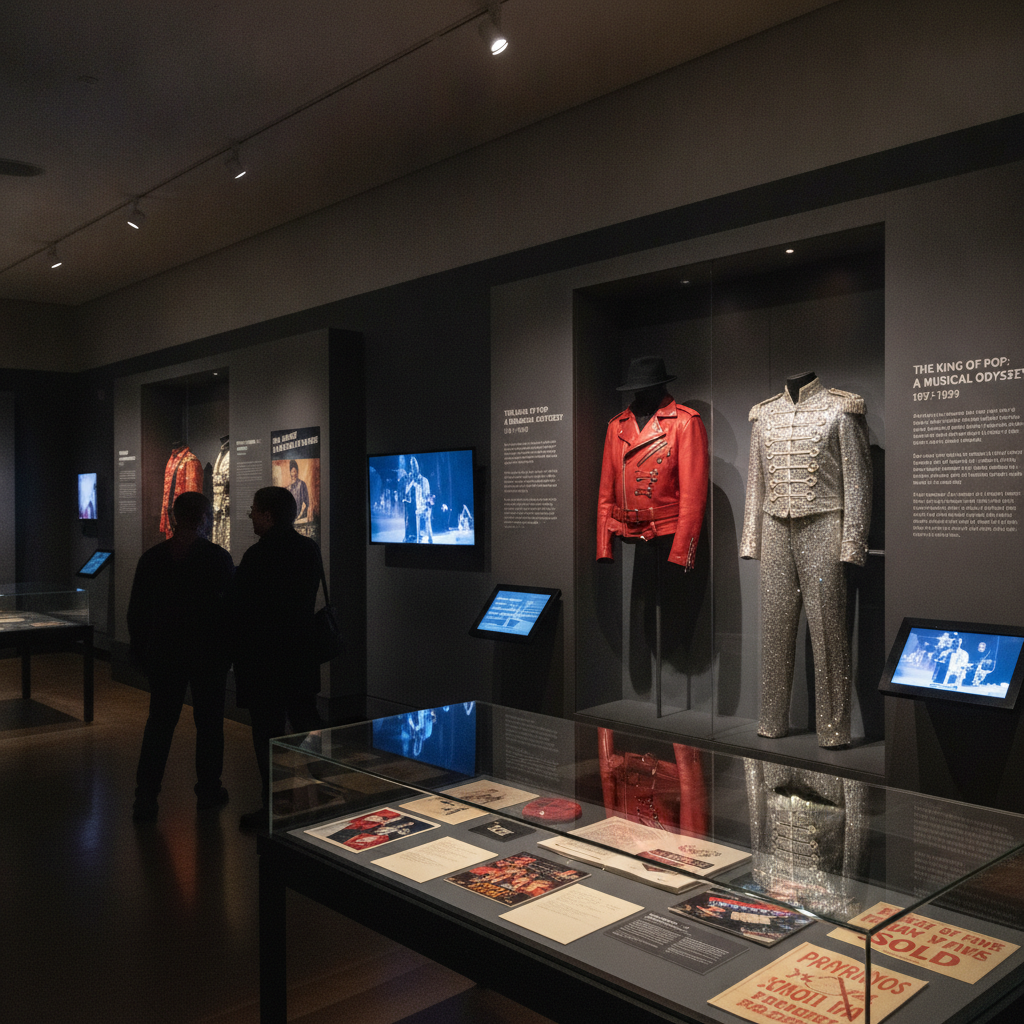
A glove, a costume, or a sheet of paper can change how a familiar song feels when you see it in person. In a pop music exhibition, objects connected to Michael Jackson offer a physical point of entry into the music, performances, and creative choices that shaped his career.
Each artifact needs context. A compelling display distinguishes documented history from guesswork and explains what an object can—and cannot—tell us about the artist who used or created it.
Why Michael Jackson Memorabilia Matters
Michael Jackson memorabilia matters because it connects visitors to the work behind his recordings and performances. When an artifact’s history is documented, it can help explain how his music reached audiences and became part of pop culture.
A recording can be replayed, but a physical object carries traces of its original purpose: a garment made for movement, a marked-up performance document, or an award presented for a particular achievement. These items make the scale and craft of a career easier to picture. They can also help visitors notice details they might miss in a music video or concert recording.
Context gives memorabilia meaning. A costume displayed beside a photograph or performance footage can reveal how a look worked onstage. An award gains more significance when its label identifies the honor, date, and issuing organization. Without that information, even a striking object risks becoming decoration rather than evidence.
Exhibitions should avoid treating every associated object as equally revealing. Some items have a clear connection to a performance or project; others may be linked to Jackson only through an unverified claim. Responsible interpretation makes that difference visible.
Stage-Worn Costumes and Performance Style
Stage-worn costumes show how clothing and accessories helped shape Michael Jackson’s changing performance style. When their use is verified, they offer clues about movement, visual identity, and the demands of performing before a large audience.
Jackson’s stage persona developed across decades of live shows, television appearances, and music videos. A costume can be read as part of that visual language: its silhouette, materials, and accessories may stand out under bright lights or help create a recognizable outline in motion. The display becomes more informative when it pairs the garment with photographs or footage from the relevant era.
Condition and construction matter, too. A garment may show how it was designed to fit or move, while conservation limits how long it can remain on display. Visitors should not assume that every famous-looking outfit was worn at a particular concert. Attribution depends on records, such as collection documentation, photographs, or other credible evidence—not resemblance alone.
For curators, the balance is practical as well as interpretive: intense lighting can make fabric details easier to see, but light exposure can harm sensitive materials. A well-designed exhibition explains why an artifact is displayed in a particular way and uses supporting media when an original cannot safely remain on view.
Items That Bring Iconic Performances to Life
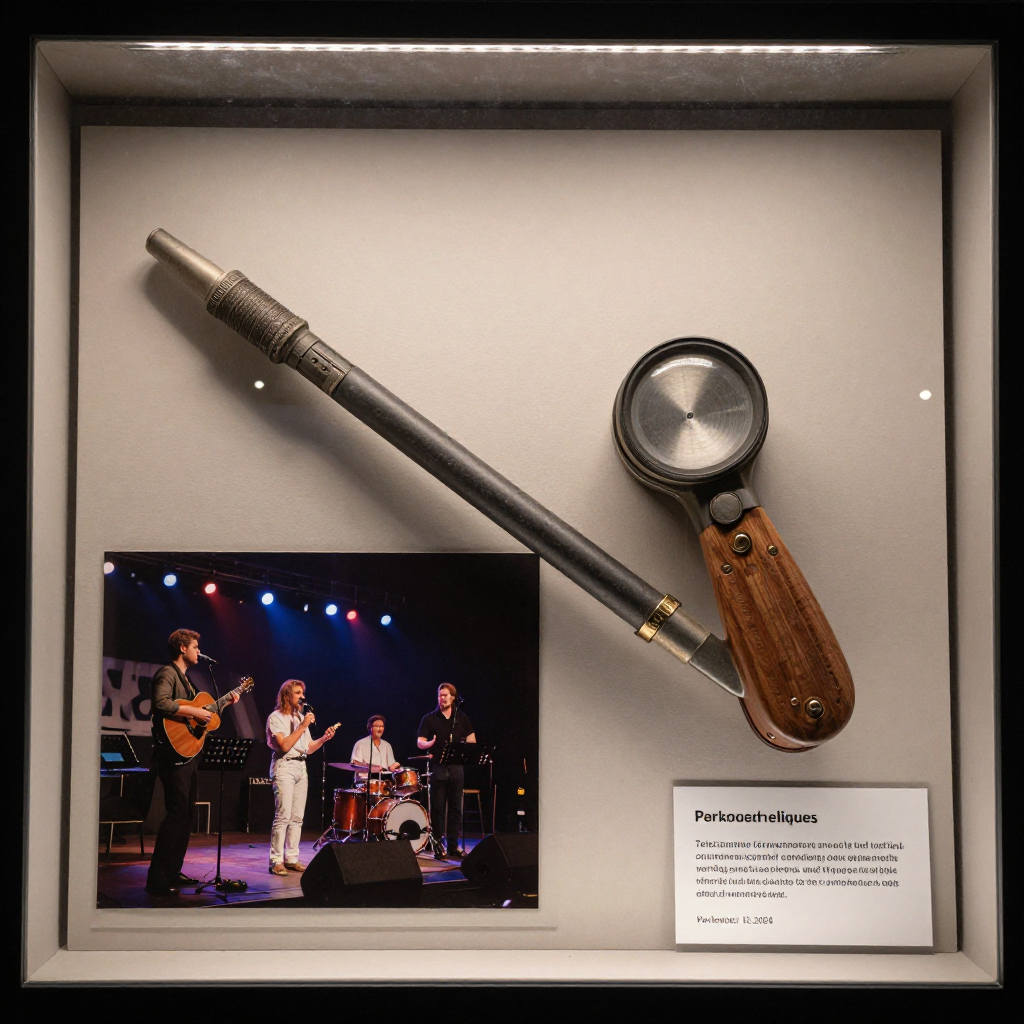
Performance props and materials bring a concert or video concept into the exhibition space by showing how a performance was staged. They are most useful when labels connect them to a specific, documented production or event.
A prop may help visitors understand how Jackson combined choreography, costume, lighting, and music to create a memorable moment. Other exhibition materials might include stage plans, production photographs, or a concert setlist. Each provides a different kind of evidence: a photograph records what an audience could see, while a setlist can show the order of songs planned for a particular performance.
These records also have limits. A setlist may document an intended sequence, but it does not by itself prove that every song was performed exactly as listed. Likewise, a prop’s appearance in an exhibition does not establish that it came from a particular music video unless the provenance supports that connection. The most persuasive displays pair objects with dated records, credible images, or carefully sourced accounts.
That mix of object and explanation lets visitors move beyond recognition. Instead of simply thinking, “I know this look,” they can consider the decisions that made the performance work.
Behind the Music: Creative and Personal Artifacts
Creative and personal artifacts can illuminate how music and performances took shape, but their interpretation depends on reliable documentation. Concert setlists, handwritten notes, and working materials should be presented with clear evidence of their origin and intended use.
A handwritten note may seem intimate, yet handwriting alone cannot establish who wrote it, when it was written, or why it exists. A document might be a draft, a copy, or a later annotation. Strong provenance could include records from a collection, an established chain of custody, or other corroborating evidence. Exhibition labels should state what is known and identify uncertainty rather than turn it into a dramatic story.
When authenticated and properly interpreted, creative documents can open useful questions. Was a song order revised? Does a note relate to a particular session or performance? Does the document reveal a practical choice, such as timing or arrangement? These questions help visitors understand creative work without claiming access to private thoughts the artifact cannot verify.
Personal does not automatically mean informative. An object’s connection to Jackson may be less important than the evidence surrounding it. A careful exhibition keeps the focus on verifiable context and respects the difference between archival material and speculation.
Tracing a Career Through Memorabilia
Michael Jackson memorabilia can trace a career by grouping artifacts with the periods, projects, and milestones they document. A chronological display helps visitors see how his music and public performance style evolved over time.
One useful approach is to organize objects around three questions: What period does this represent? What work or performance is it connected to? What evidence supports that link? The framework works for a costume, an award, a photograph, or a setlist, and it helps prevent an exhibition from relying on fame alone to explain an item.
- Early career: Materials linked to the Jackson 5 years can introduce the group’s recordings and performances, provided the object’s date and connection are established.
- Solo breakthrough: Music awards, promotional materials, or performance imagery can show how landmark projects reached broader audiences when the records identify the relevant achievement.
- Music-video era: Documented props, costumes, and production images can explain the visual storytelling that helped make videos central to pop music.
- Later performances: Rehearsal or concert materials may offer a view of preparation and presentation, as long as their source and context are clear.
A timeline is helpful, but it should not imply that artistic development follows a perfectly straight line. Visitors can compare recurring choices—such as choreography, visual motifs, or the relationship between clothing and movement—across different periods. That comparison turns memorabilia into a way to explore career legacy, rather than a row of disconnected objects.
How Exhibitions Present Rare Artifacts
Pop music exhibitions present rare artifacts best by pairing careful conservation with clear provenance and engaging interpretation. Visitors need enough context to understand an object’s significance, while curators need to protect materials that may be fragile or light-sensitive.
Authentication is a process, not a visual impression. Institutions may review documentation, ownership history, photographs, material evidence, and expert assessments, depending on the object. No single clue guarantees authenticity, and a public label should avoid certainty that the available records do not support.
When viewing an artifact, look for details that help you assess the display:
- Does the label identify what the item is and how it relates to a performance, recording, or project?
- Does it explain the basis for attribution, or distinguish confirmed facts from uncertainty?
- Are related photographs, video, or documents included to help establish context?
- Does the exhibition explain conservation choices, such as limited lighting or rotating displays?
Digital screens and reproductions can add useful detail, particularly when an original cannot be displayed for long. They are not equivalent to the artifact itself, though; a reproduction should be identified as such. The strongest exhibitions use technology to clarify the evidence, not to blur the line between original material and interpretation.
Frequently Asked Questions
What makes Michael Jackson memorabilia rare? Rarity can reflect limited production, a direct link to a documented event, or the survival of a particular working artifact. Rarity alone does not prove authenticity or determine an item’s historical importance.
What kinds of items might appear in an exhibition? Displays may include stage costumes, performance props, concert setlists, handwritten notes, music awards, photographs, and materials related to music videos. What appears depends on the collection and the evidence available.
How can visitors assess an artifact’s authenticity? Read the label for provenance and supporting documentation. A visual resemblance or confident claim is not enough; credible authentication considers records and corroborating evidence.
What can memorabilia reveal about an artist’s career? Properly documented objects can show how performances were staged, how a visual identity changed, and how music reached audiences. They offer evidence and context, not a complete account of an artist’s life or creative intentions.