Behind the Scenes: How Pop Music Exhibitions Are Curated
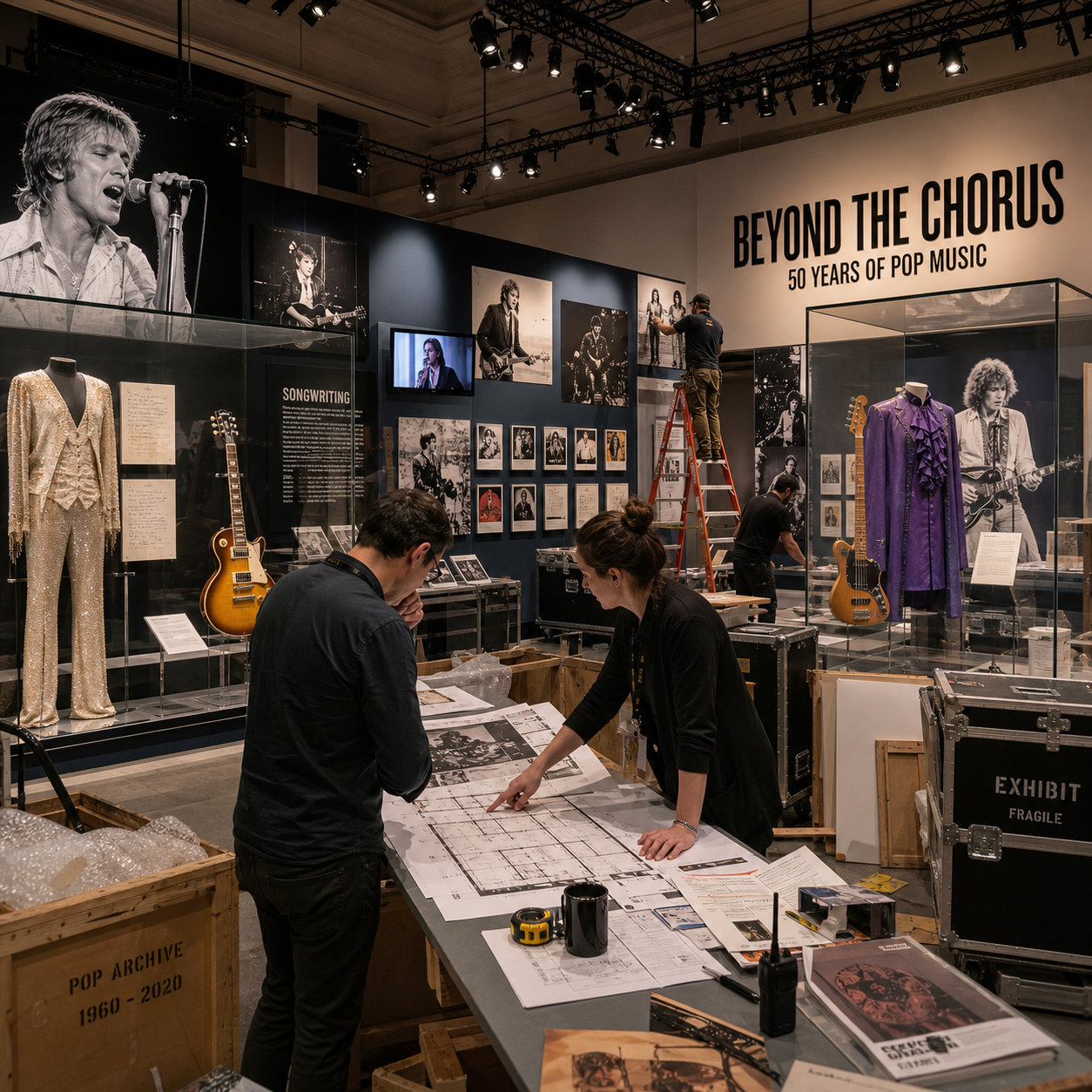
A pop music exhibition may look polished when it opens, but the finished gallery represents months or years of research, negotiation, conservation, design, and technical testing. Behind each costume, lyric sheet, photograph, and audio clip is a decision about evidence, meaning, condition, and audience.
The process is closer to building a carefully sourced historical argument than arranging celebrity memorabilia. An exhibition curator must connect objects with personal testimony, archival records, music history, and an accessible exhibition narrative. The result should give visitors both reliable context and a sense of discovery.
What Goes Into Curating a Pop Music Exhibition?
Curating a pop music exhibition means turning a broad subject, such as an artist, genre, scene, or musical era, into a focused public story. The curator defines the theme, gathers evidence, selects objects, and coordinates the specialists who bring that story into the gallery.
The first task is usually developing a concept. A proposal might focus on an artist’s songwriting practice, the visual language of a particular movement, the relationship between music and fashion, or the technology that changed how audiences listened. A topic that sounds simple can quickly become too large, so curators establish boundaries around time, geography, collaborators, and themes.
A useful planning test is the three-part curatorial filter:
- Evidence: Can the claim be supported by reliable archival material or testimony?
- Meaning: Does the object or story help visitors understand the exhibition’s central idea?
- Experience: Will visitors be able to connect with it through sight, sound, text, or emotion?
This filter prevents the exhibition from becoming a crowded collection of famous items. A rare object may be historically important but difficult to interpret. A familiar photograph may be visually powerful yet add little new information. Strong curation gives each significant element a clear job.
Researching the Artist, Era, and Story
Research establishes the factual foundation of a pop music exhibition and shapes its exhibition narrative. Curators combine a pop music archive with recordings, biographies, interviews, photographs, press material, oral history, and wider social context.
Research often begins with a timeline. The team maps recordings, performances, collaborations, changes in personnel, shifts in public image, and important cultural events. They then identify gaps: a period described differently by multiple sources, an object with uncertain ownership, or a major event remembered only through later accounts.
Primary sources are especially valuable. These may include studio notes, correspondence, tour documents, set lists, contracts, contact sheets, fan-club publications, and original audio. An oral history interview can explain why an object mattered, how a decision was made, or what a photograph leaves out. It should still be compared with documentary evidence because memory changes over time.
Secondary sources provide context. Music journalism, academic writing, broadcast archives, and social history can show how an artist’s work relates to race, technology, gender, politics, commerce, or youth culture. The curator’s responsibility is to avoid presenting a career as an isolated sequence of glamorous moments.
Digital catalogues and institutional resources, including the Library of Congress, can help researchers locate recordings, photographs, and preservation guidance. Every source is logged so label writers can distinguish verified fact, informed interpretation, and unresolved uncertainty.
Selecting and Authenticating Objects
Objects are selected for their evidential value, storytelling power, condition, and ability to support the exhibition theme. Authentication then tests whether each item is genuinely connected to the person, recording, performance, or moment claimed.
A selection list may include costumes, instruments, handwritten lyrics, photographs, posters, awards, backstage passes, contracts, album artwork, personal notebooks, and recording equipment. The most visually dramatic item is not automatically the strongest choice. A marked-up rehearsal sheet may reveal creative decisions more clearly than a highly recognizable trophy.
Curators and registrars build a provenance record for each loan. This can include:
- Previous owners and the chain of custody
- Purchase records, letters, catalogues, or estate documentation
- Photographs showing the object in use
- Maker’s marks, serial numbers, inscriptions, and material analysis
- Condition reports and any previous restoration
Provenance is not a guarantee of truth by itself. A persuasive story about ownership still needs corroboration. Specialists may compare a guitar’s serial number with production records, examine a costume’s construction, or match a lyric draft with handwriting and paper characteristics. When certainty is impossible, responsible interpretation uses careful wording rather than presenting speculation as fact.
Condition also affects selection. A fragile paper item may be displayed briefly, shown as a facsimile, or rotated with another object. Choosing a famous artifact for its emotional appeal means accepting limits on light exposure, handling, and loan duration.
Working With Artists, Estates, and Collections
Pop music exhibitions depend on collaboration among artists, artist estates, archives, private collectors, rights holders, lenders, and specialist advisers. These relationships provide access and insight, while formal agreements define what can be borrowed, reproduced, recorded, or displayed.
An artist or estate may supply personal context, identify collaborators, correct dates, and locate objects outside a public collection. A pop music archive can offer catalogued materials and stable documentation. Private collectors may hold rare posters, stage clothing, or fan-produced objects that institutions cannot easily acquire.
Access, however, does not remove the curator’s independence. Estates naturally have a view of how an artist should be represented, and lenders may prefer their objects to appear prominently. The exhibition team must protect accuracy while handling sensitive issues such as discarded recordings, disputed authorship, addiction, illness, exploitation, or commercial disagreements.
Permissions form a separate layer of work. Object ownership does not always include copyright, image rights, trademark rights, or permission to play a recording. The team may need agreements for lyrics, photographs, film excerpts, interviews, album covers, and music videos. A rights clearance problem discovered after design begins can force expensive changes.
Clear communication helps. Loan agreements should specify transport, insurance, display conditions, credit lines, photography rules, security, return dates, and responsibility for conservation. A single shared object database also reduces errors when dozens or hundreds of items move through research, packing, installation, and deinstallation.
Designing the Visitor Journey
Exhibition design guides visitors through the story using space, lighting, labels, sound, video, objects, and interactive displays. The goal is a coherent visitor experience in which each sensory element supports interpretation rather than competing for attention.
Designers often translate the curator’s research into thematic zones. A gallery might move from local roots to breakthrough recordings, then to performance, image-making, collaboration, and legacy. Chronology can help visitors orient themselves, but themes may create stronger connections between objects from different periods.
Labels do essential work. A concise label identifies the object, date, maker, owner, and relevance. Longer texts can explain unfamiliar technology or historical context, while digital screens may offer deeper material for visitors who want it. The first sentence should answer the visitor’s immediate question: what is this, and why is it here?
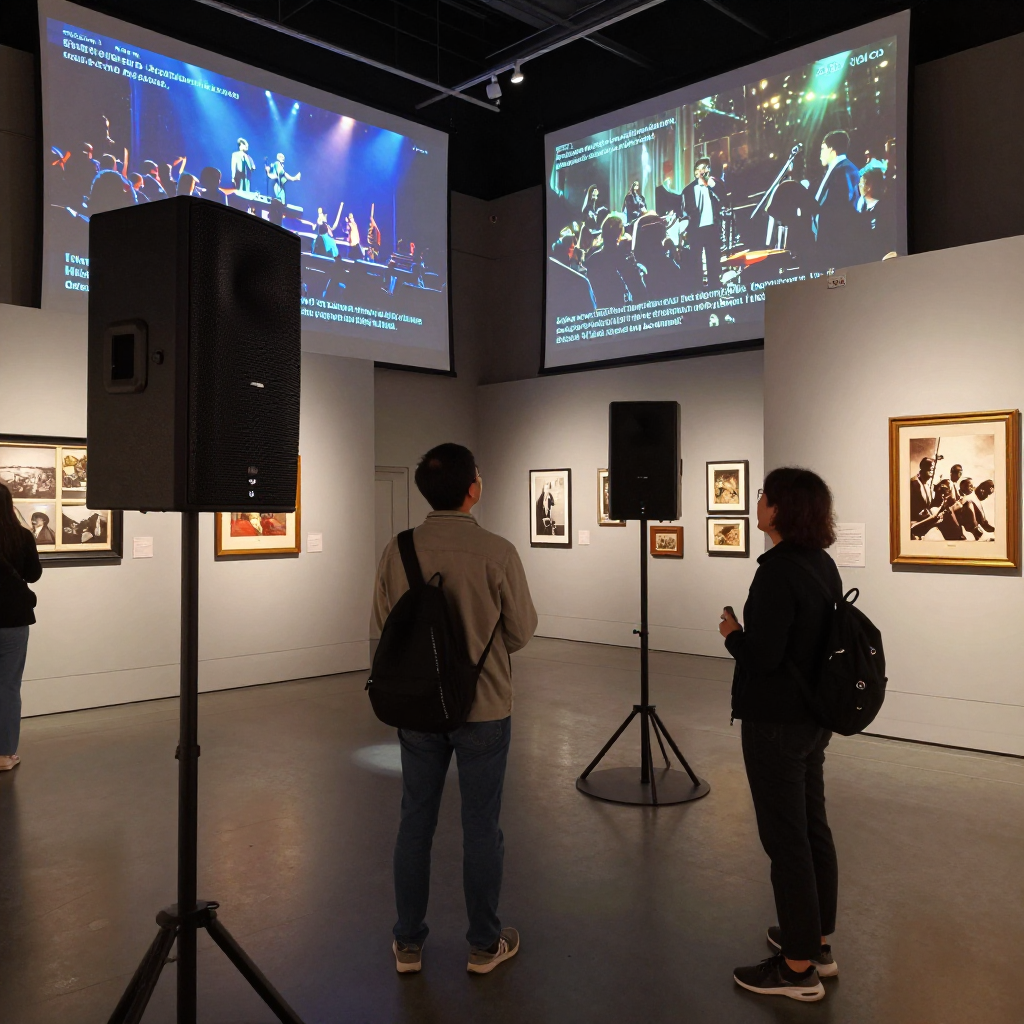
An audio-visual installation can make a gallery feel immersive, but sound creates practical complications. Audio bleed may make neighboring sections difficult to understand. Headphones improve separation but can create queues and hygiene concerns. Video requires reliable playback, captions, maintenance access, and a plan for obsolete file formats or hardware.
Accessibility must be designed from the beginning. Captions, transcripts, wheelchair-friendly circulation, readable contrast, seating, tactile alternatives where appropriate, and quiet areas expand participation. A visually spectacular gallery that excludes visitors with hearing, vision, mobility, or sensory needs has failed part of its interpretive brief.
Preserving Pop Music History for the Public
Preserving pop music history requires object conservation, controlled environmental conditions, secure handling, and digital preservation. Costumes, paper, plastics, magnetic tape, electronics, and instruments each respond differently to light, temperature, humidity, vibration, and time.
Before installation, a conservator examines every item and records its condition. The report may identify stains, loose seams, fading, corrosion, brittle paper, unstable plastics, or previous repairs. Mounts and cases are then designed to support objects without causing pressure or abrasion.
Light is a major risk for textiles, photographs, posters, and manuscripts. A display may use low illumination, ultraviolet filtration, timed lighting, or a shorter exhibition period. Those controls can make a dark costume harder to see, so designers may adjust background colour, spotlight position, or label placement instead of simply increasing brightness.
Environmental controls matter too. Institutions monitor temperature and relative humidity, while cases may provide a more stable microclimate than the surrounding gallery. Security staff and registrars also plan for vibration, theft prevention, emergency response, packing, and safe movement through doors and lifts.
Digital material requires its own strategy. Original files should be preserved in stable formats, with multiple copies, documented metadata, and regular integrity checks. Playback equipment may need to be replaced during a long exhibition, so the team separates the preserved master from the public presentation copy.
Measuring a Successful Exhibition
A successful pop music exhibition combines historical credibility, emotional connection, accessibility, and clear interpretation. Attendance matters, but it cannot show whether visitors understood the story or felt represented by it.
Evaluation can include exit surveys, observation of visitor movement, label testing, school-group feedback, accessibility reviews, online responses, and attendance at talks or workshops. Staff may notice that visitors skip a dense text panel, gather around one object, or fail to understand why a technical device matters. Those observations can guide changes during the run.
The strongest exhibitions usually balance four forms of value:
- Historical value: Claims are sourced, provenance is transparent, and context extends beyond celebrity.
- Material value: Objects are authentic, well preserved, and presented with appropriate care.
- Emotional value: Visitors sense the human labour, uncertainty, collaboration, and ambition behind the music.
- Public value: The experience is accessible to committed fans, first-time visitors, students, and communities connected to the story.
Common mistakes reveal what good curation requires. Treating memorabilia as self-explanatory leaves visitors without context. Overloading the gallery with sound and screens weakens attention. Relying on one approved version of an artist’s history can silence collaborators and contradict archival evidence. Each problem has the same correction: connect every display choice to a documented question and test it with real visitors.
Frequently Asked Questions
What does a pop music curator do?
A pop music curator develops the exhibition concept, researches its subject, selects and interprets objects, checks provenance, coordinates loans and permissions, and works with designers, conservators, archivists, and educators.
How are objects chosen for a music exhibition?
Objects are chosen for authenticity, relevance, condition, availability, and their ability to explain the exhibition’s central story. Famous items may attract attention, while less familiar documents often provide essential context.
How are costumes and instruments preserved?
Conservators assess condition, provide custom supports, limit light exposure, control temperature and humidity, and specify safe handling. Instruments may also require protection from vibration, dust, and unsuitable mounting pressure.
What role does sound and video play in an exhibition?
Sound and video provide performance, voice, and historical atmosphere that physical objects cannot convey alone. They require captions, rights clearance, reliable equipment, careful volume control, and regular technical checks.
How long does it take to curate a pop music exhibition?
The timeline varies by scale, loans, rights, conservation needs, and venue. A substantial exhibition commonly requires many months or several years from initial concept to opening because research, agreements, fabrication, and testing overlap.
When visitors enter a pop music exhibition, they see the public result of a much larger process. The gallery is built from evidence, negotiation, material care, design decisions, and voices that may never appear on the wall. That behind-the-scenes work turns music history into an experience people can question, feel, and carry with them.