The History of Pop Music in Los Angeles: From Motown to Modern Day
How Los Angeles Became the Center of American Pop Music
Los Angeles didn't become the capital of American pop music by accident. A rare combination of year-round sunshine, a booming post-war economy, and the gravitational pull of Hollywood's entertainment infrastructure created conditions that no other city could replicate.
By the late 1950s, the city already had world-class recording studios, a deep pool of session musicians, and a radio landscape hungry for new sounds. Record labels discovered they could record, market, and distribute music from a single zip code. That kind of vertical integration was almost impossible to find in New York or Chicago at the time.
Geography played a role too. Southern California's cultural diversity — waves of migrants from the South, Latin America, and Asia — fed a constant stream of new influences into the city's music scene. Pop music, at its core, is about synthesis. LA gave artists more raw material to work with than almost anywhere else in the country.
The California Sound and the Birth of LA Pop Identity (1960s)
The California Sound — bright harmonies, reverb-soaked guitars, and lyrics about beaches, cars, and endless summers — gave Los Angeles its first globally recognized pop signature. No group embodied this more completely than The Beach Boys.
Brian Wilson and his bandmates recorded much of their early catalog at Western Recorders and Gold Star Studios in Hollywood, using the city's extraordinary pool of session players to build arrangements that were technically far ahead of their time. Albums like Pet Sounds (1966) demonstrated that LA pop could be both commercially massive and artistically ambitious — a tension the city has been navigating ever since.
Capitol Records, headquartered in its iconic circular tower on Vine Street in Hollywood, served as the institutional backbone of this era. The label's investment in recording technology and artist development helped turn LA into a legitimate rival to New York's Tin Pan Alley tradition. Capitol wasn't just a business — it was a statement that serious pop music could be made west of the Rockies.
The surf and sunshine sound spread internationally through radio and television, and for a generation of listeners around the world, LA became synonymous with a particular kind of optimism. That identity would evolve dramatically, but it never fully disappeared from the city's musical DNA.
Motown Moves West — Soul and Pop Collide in LA
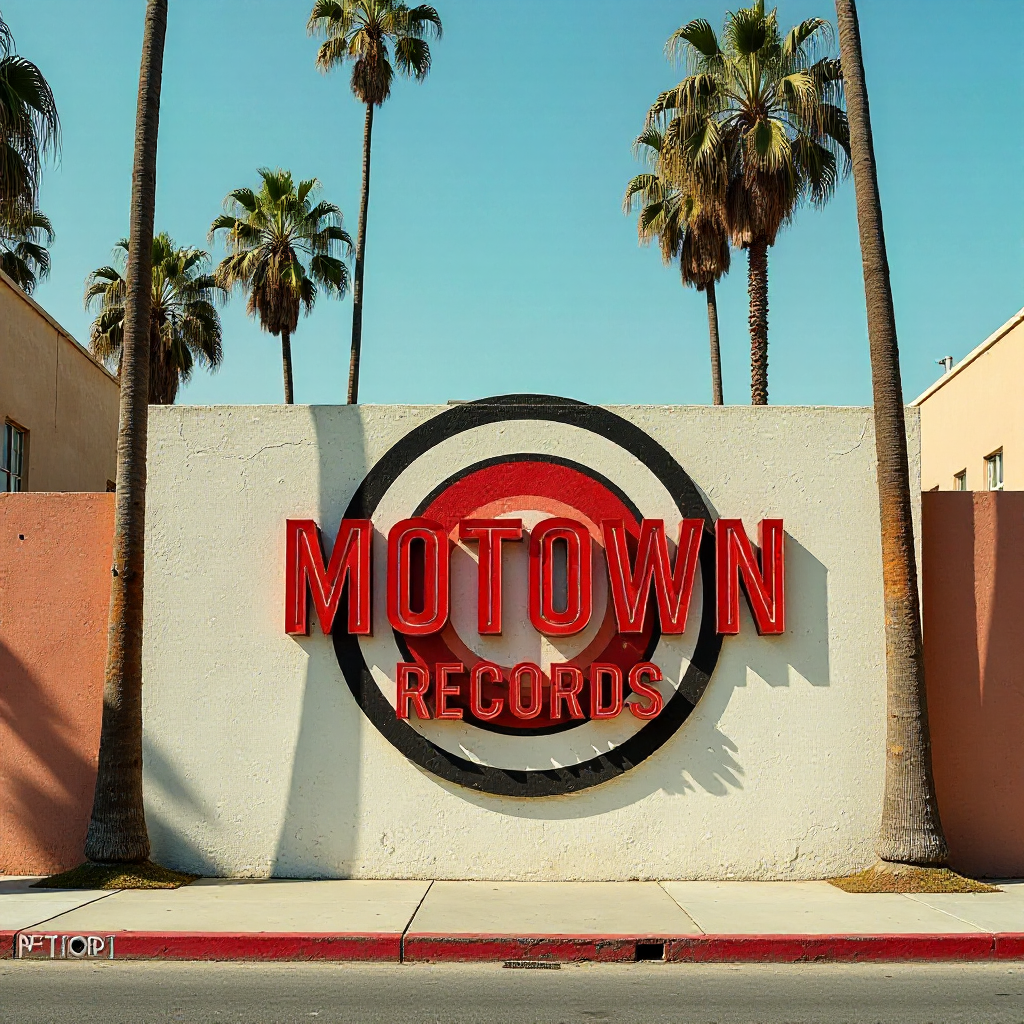
Motown Records relocated its headquarters from Detroit to Los Angeles in 1972, and the move reshaped the city's pop ecosystem in ways that are still felt today. Berry Gordy chose LA for practical reasons — proximity to film and television production — but the cultural consequences ran much deeper.
The label brought with it a sophisticated approach to pop songwriting, artist development, and crossover marketing that had already proven capable of bridging racial divides on the American charts. When Motown's West Coast influence merged with LA's existing studio infrastructure, the result was a richer, more soulful strain of pop that defined much of the mid-1970s mainstream.
Artists like Marvin Gaye, who recorded Let's Get It On in LA after the move, and Lionel Richie, who would go on to become one of the city's defining pop figures of the 1980s, represented this fusion of Detroit soul craft and California production polish. The Motown relocation also deepened LA's connections to Black American music traditions, giving the city's pop scene a cross-cultural breadth that its earlier surf-pop era had lacked.
The Sunset Strip Era — Rock, Pop, and the Rise of the LA Sound (1970s–80s)
The Sunset Strip transformed LA pop through two decades of creative collisions between rock ambition, pop craftsmanship, and emerging electronic music. The clubs and rehearsal spaces along this stretch of West Hollywood became incubators for sounds that would dominate global charts.
Before the glam metal era took hold, the Strip's pop legacy was already being built in the recording studios just off it. The Wrecking Crew — a loose collective of elite session musicians including Hal Blaine, Carol Kaye, and Larry Knechtel — played on an extraordinary number of hit records throughout the 1960s and into the 1970s. They were the invisible engine behind dozens of chart-topping singles for artists ranging from The Mamas & the Papas to The Monkees to Simon & Garfunkel. Most listeners had no idea the same core group of players appeared on records by wildly different artists — that was exactly how the LA studio system worked.
By the early 1980s, the city's pop identity shifted again. New wave and synth-pop found a natural home in LA, where the combination of recording technology investment and a fashion-forward entertainment culture made electronic pop feel organic rather than imported. Acts like Missing Persons and Berlin emerged from the LA club scene with a sleek, cinematic sound that owed as much to the city's film industry aesthetic as to any British influence.
The decade closed with LA firmly established as the production capital of American pop — a city where the infrastructure, the talent pool, and the industry relationships all pointed toward the same outcome: hits.
From Hip-Hop Crossover to Teen Pop — LA Dominates the Charts (1990s–2000s)
Los Angeles dominated global pop charts across two decades by producing two of the most commercially powerful movements in music history: West Coast hip-hop's mainstream breakthrough and the teen pop explosion of the late 1990s.
Death Row Records, founded in Compton in 1991, became one of the most influential labels in pop history — not just hip-hop history. Dr. Dre's production approach, built around deep bass, cinematic arrangements, and radio-ready hooks, pulled West Coast rap directly into mainstream pop territory. Songs that charted on hip-hop radio crossed over to Top 40 almost automatically, and the sonic template Death Row established reshaped what pop music was allowed to sound like.
The crossover wasn't just sonic — it was cultural. LA's hip-hop scene brought new fashion, new language, and new attitudes into the mainstream pop conversation, permanently expanding the genre's boundaries.
Then came the teen pop wave. By the late 1990s, LA's production infrastructure — its studios, its songwriter networks, its label machinery — was perfectly positioned to manufacture a new kind of pop star. Britney Spears recorded much of her early work with LA-based producers, and her sound became the template for an era. The city's ability to combine image-making, radio production, and marketing into a single coordinated operation gave it an almost unfair advantage in the global pop market during this period.
Modern Day LA Pop — Streaming, Diversity, and Global Influence
Contemporary Los Angeles pop operates at a scale and with a cultural reach that previous generations of LA musicians couldn't have imagined. The city's producers and songwriters are responsible for a significant portion of what appears on global streaming charts each week.
The streaming era has changed the economics of pop production without changing LA's structural advantages. The city still has the deepest concentration of hit-making producers, the strongest label infrastructure, and the most sophisticated network of co-writers and topliner vocalists in the world. What's shifted is the speed — tracks move from studio session to global release in weeks rather than months, and the feedback loop between artist, producer, and audience is nearly instantaneous.
LA's multicultural character has become its most visible competitive advantage in the streaming age. Artists drawing on Latin pop, K-pop production aesthetics, R&B, and electronic dance music are recording and collaborating across genre lines in ways that reflect the city's demographics. The result is a strain of pop that feels genuinely global while remaining rooted in a specific place.
Producers working out of studios in Burbank, Silver Lake, and the Valley are shaping sounds that reach listeners in Seoul, São Paulo, and Stockholm. That reach is new. The infrastructure that makes it possible has been building for sixty years.
Experiencing LA's Pop Music Legacy — The Exhibition Connection
A dedicated pop music exhibition in Los Angeles offers something that no playlist or documentary can fully replicate: the physical experience of standing inside the history. The artifacts, recordings, and visual records of each era covered here take on a different weight when you encounter them in person.
Visitors can trace the full arc — from the Capitol Records tower and the session musician culture of the 1960s through Motown's West Coast chapter, the Sunset Strip years, the Death Row era, and into the streaming present. Each transition in LA's pop story left behind objects, documents, and recordings that tell the story with a specificity that written history can only approximate.
For anyone who has read about The Wrecking Crew, heard Motown's LA-era catalog, or grown up with the pop sounds that this city produced, the exhibition is a chance to close the distance between knowledge and experience. LA's pop music history isn't archived somewhere remote — it's here, in the city where it happened, waiting to be explored.
Frequently Asked Questions
When did Motown Records move to Los Angeles?
Motown Records relocated its headquarters from Detroit to Los Angeles in 1972. Berry Gordy made the move primarily to take advantage of LA's proximity to the film and television industry, though the label's presence significantly deepened the city's pop and soul music ecosystem.
What is "The California Sound" in pop music?
The California Sound refers to the bright, harmony-driven pop style that emerged from Los Angeles in the early 1960s, most associated with The Beach Boys. It combined close vocal harmonies, reverb-heavy guitar production, and lyrical themes of surf culture, cars, and West Coast optimism into a globally recognized pop identity.
Who were The Wrecking Crew and why do they matter to LA pop history?
The Wrecking Crew was an informal collective of elite session musicians based in Los Angeles who played on hundreds of hit records throughout the 1960s and 1970s. Key members included drummer Hal Blaine and bassist Carol Kaye. They were the invisible engine behind LA's pop production dominance during that era, appearing on recordings by artists across dozens of different labels and genres.
How has Los Angeles shaped modern pop music production?
LA's concentration of producers, songwriters, studios, and label infrastructure makes it the world's most productive pop music ecosystem. In the streaming era, the city's multicultural character has added a global dimension to its output, with LA-based creators blending Latin, R&B, electronic, and K-pop-influenced production into sounds that reach audiences worldwide.
What can visitors expect from a pop music exhibition in Los Angeles?
A pop music exhibition in Los Angeles typically offers artifacts, recordings, photographs, and interactive displays tracing the city's musical history across multiple eras. Visitors can engage directly with the physical record of LA's pop legacy — from the Capitol Records era through Motown, the Sunset Strip years, and into the contemporary streaming landscape.