Iconic Pop Music Venues in LA You Must Visit
Why Los Angeles Is the Heart of Pop Music Culture
Los Angeles isn't just where pop music is made — it's where it becomes mythology. No other city on earth has produced, shaped, and exported popular music culture at the same scale or with the same sustained intensity.
From the studio lots of Hollywood to the clubs of the Sunset Strip, the Los Angeles pop music scene has been the engine behind some of the most defining moments in music history. Artists like Michael Jackson, Madonna, Beyoncé, and Taylor Swift have all claimed this city as a stage — sometimes literally.
What makes LA different from Nashville or New York isn't just the volume of talent. It's the infrastructure: a dense network of venues ranging from 200-seat clubs to 20,000-seat arenas, each with its own chapter in the story of live music history. Visiting these spaces isn't passive sightseeing. For any serious pop music fan, it's closer to pilgrimage.
And increasingly, that pilgrimage has a dedicated anchor: the growing world of pop music exhibitions in Los Angeles that let visitors go deeper into the stories behind the songs, the stages, and the artists who defined generations.
Hollywood Bowl – Where Pop Legends Have Performed Under the Stars
The Hollywood Bowl is the single most iconic outdoor concert venue in the United States, and arguably the world. Nestled into the Santa Monica Mountains in the Hollywood Hills, this natural amphitheater has hosted live performances since 1922 — and pop music history runs through nearly every decade of its existence.
The Beatles played here in 1964 and 1965, with recordings from those shows later released as a live album. Elton John, Diana Ross, and Prince have all performed on its legendary shell-covered stage. The venue seats over 17,000 people, yet somehow retains an intimacy that larger arenas simply can't replicate — partly because of the natural acoustics, partly because of the hillside setting that wraps the audience around the performance.
Visiting the Hollywood Bowl even outside of concert season has real value. The Hollywood Bowl Museum, located on-site, offers free admission and traces the venue's full history through photographs, memorabilia, and archival recordings. It's one of the few places in LA where the live music history of the city is presented with genuine curatorial depth.
If you're planning a summer visit, booking tickets to a show here should be non-negotiable. Bring a picnic — it's a Bowl tradition — and arrive early to soak in the atmosphere before the lights go down.
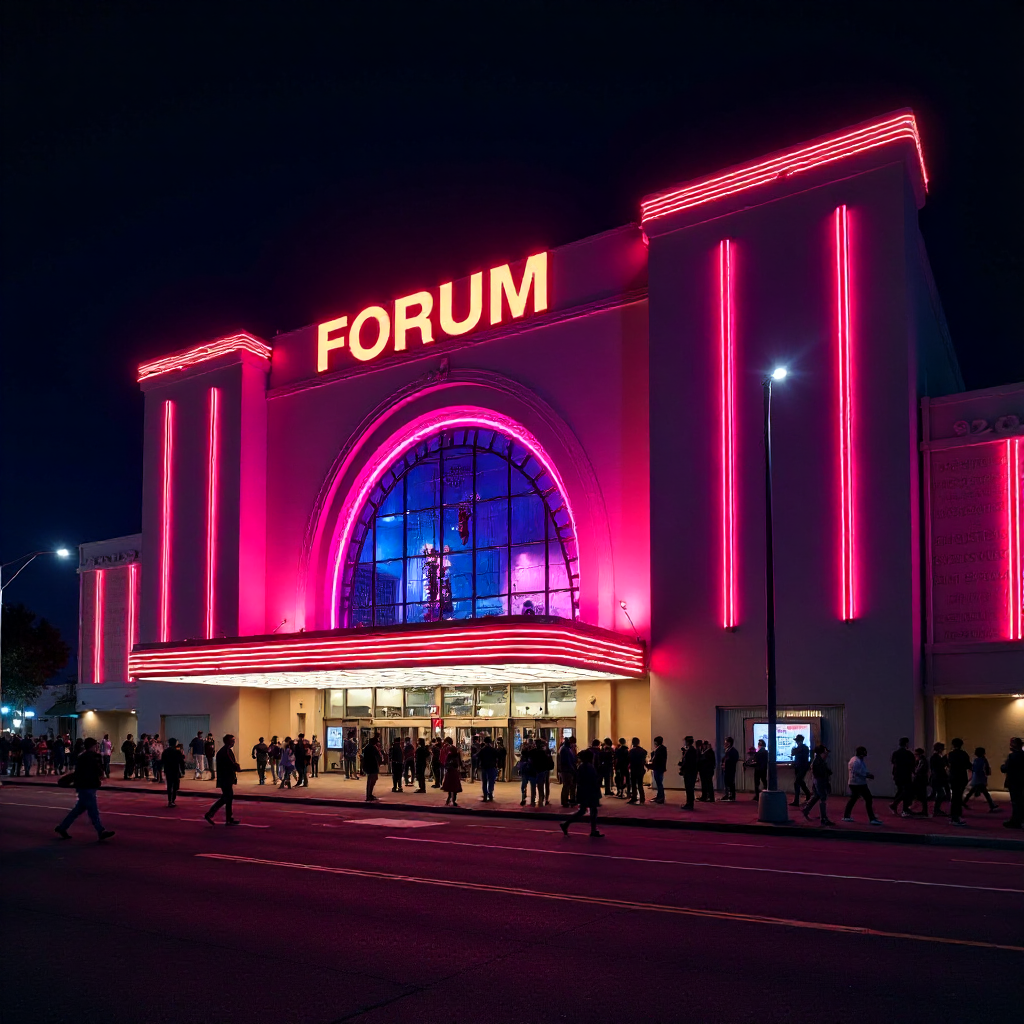
The Forum – A Temple of Pop Music in Inglewood
The Forum in Inglewood is the closest thing Los Angeles has to a sacred hall of pop music. Built in 1967 and renovated extensively in 2012, this circular arena has hosted more defining pop concerts than perhaps any other venue in the city.
Led Zeppelin played 36 nights here. Michael Jackson filmed parts of his Destiny tour footage at the Forum. Prince recorded his legendary One Nite Alone… Live! album within these walls. The list goes on — and it spans every corner of popular music, from soul and R&B to synth-pop and hip-hop crossover acts.
What separates the Forum from newer arenas is feel. The circular design creates sightlines that are genuinely good from almost every seat, and the venue's history is palpable in a way that glass-and-steel modern arenas rarely achieve. Adele famously chose the Forum for her 2016 North American residency, selling out multiple nights and cementing the venue's continued relevance in the modern pop era.
The Forum doesn't have a permanent museum, but the building itself tells a story. Walking the concourse, you'll find historical photos and documentation of its most significant shows. For music tourism focused on pop history, it's an essential stop in any LA itinerary.
The Troubadour and The Roxy – Intimate Stages That Launched Careers
If the Hollywood Bowl and the Forum represent pop music at its most monumental, The Troubadour and The Roxy Theatre represent something equally important: the moment before the stadium, when everything was still possible.
The Troubadour, located on Santa Monica Boulevard in West Hollywood, opened in 1957. Elton John played his first US show here in 1970 — a performance that music critic Robert Hilburn called one of the greatest debut performances he'd ever witnessed. James Taylor, Carole King, and Linda Ronstadt all passed through this stage during the singer-songwriter era. The venue holds around 500 people, and that intimacy is the point.
A few blocks away on the Sunset Strip, The Roxy Theatre opened in 1973 and quickly became the proving ground for artists on the edge of breaking through. Neil Young, Bruce Springsteen, and later pop-adjacent acts like No Doubt and Sheryl Crow all performed early career-defining shows here. The Roxy also hosted the launch party for Lou Adler and John Belushi's Blues Brothers project — a footnote that captures just how central this small venue was to LA's broader creative ecosystem.
Both venues still operate as active concert spaces. Seeing a show at either one — even from a relatively unknown act — gives you a direct sensory connection to the live music history that shaped the pop music landscape.
Crypto.com Arena – Where Modern Pop Spectacles Come to Life
Crypto.com Arena (formerly Staples Center) is the home of contemporary pop music at its most theatrical and commercially ambitious. Opened in 1999 in downtown Los Angeles, it has hosted the Grammy Awards more times than any other venue in history — a fact that alone tells you something about its centrality to the pop music world.
Beyoncé's Formation tour, Taylor Swift's Reputation stadium run, Lady Gaga's residency-style performances — these are the kinds of events that define what pop spectacle looks like in the 21st century, and Crypto.com Arena has been the backdrop for many of them. With a capacity of around 20,000, it's built for productions that require massive stage infrastructure, elaborate lighting rigs, and the kind of logistical scale that smaller venues simply can't support.
For music tourism purposes, the arena's location in downtown LA makes it easy to pair with other city experiences. The surrounding LA Live entertainment complex includes restaurants, bars, and the Grammy Museum — a world-class pop music exhibition space that documents the full sweep of recorded music history with rotating exhibits, interactive installations, and an extensive archive of costumes, instruments, and handwritten lyrics.
The Grammy Museum alone is worth a dedicated visit. It's one of the most substantive pop music exhibition experiences available anywhere in the United States, and its proximity to Crypto.com Arena makes the combination a natural anchor for any music-focused day in downtown LA.
The Greek Theatre – An Open-Air Gem in the Heart of the City
The Greek Theatre sits inside Griffith Park and holds a special place in the hearts of Angelenos who've grown up attending concerts there. It's a mid-size outdoor amphitheater — capacity around 5,900 — that hits a sweet spot the Hollywood Bowl and Crypto.com Arena can't: large enough for established artists, intimate enough that no seat feels disconnected from the stage.
Elton John has performed at the Greek more times than almost any other artist, and the venue's tree-lined setting gives summer concerts a quality that's hard to describe without sounding hyperbolic. The surrounding park, the warm evening air, the sight lines framed by eucalyptus trees — it adds up to an experience that feels distinctly Californian in the best possible way.
From a pop music history perspective, the Greek has hosted significant moments across multiple decades: Diana Ross, Janet Jackson, Mariah Carey, and more recently Harry Styles and Olivia Rodrigo have all performed here. It's a venue that bridges eras without feeling like a museum piece, which is a harder balance to strike than it sounds.
Plan Your Visit – Pair the Venues with a Pop Music Exhibition in LA
Visiting these venues is powerful on its own. But pairing a venue tour with a dedicated pop music exhibition in Los Angeles transforms a good trip into a genuinely immersive fan experience.
The Grammy Museum at LA Live is the most obvious starting point — it's open most days of the week, centrally located, and covers pop music history with a depth and breadth that rewards multiple visits. Beyond that, LA regularly hosts traveling exhibitions tied to specific artists or eras, often staged at venues like the Petersen Automotive Museum or dedicated pop-up spaces around Hollywood.
A practical approach for planning: anchor your itinerary around a live show (the Hollywood Bowl in summer, the Greek Theatre in fall, or Crypto.com Arena for major tours year-round), then build the surrounding days around venue visits and exhibition experiences. The Troubadour and the Roxy are within walking distance of each other on the Sunset Strip, making them easy to combine in a single afternoon.
The real value of this kind of trip isn't just seeing famous buildings. It's standing in the rooms where the music actually happened — where the crowd noise that shaped an artist's confidence first echoed, where the songs you know by heart were first performed to strangers. Los Angeles offers that experience at a scale no other city can match.
Frequently Asked Questions
What is the most historic pop music venue in Los Angeles?
The Hollywood Bowl is widely considered the most historically significant pop music venue in LA, with a performance history stretching back over a century. The Forum in Inglewood runs a close second for its unmatched legacy of iconic pop and rock concerts from the 1960s through today.
Can tourists visit these LA music venues without attending a concert?
Several venues offer access outside of show nights. The Hollywood Bowl Museum is free and open to visitors during the season. The Grammy Museum near Crypto.com Arena is open most days with paid admission. The Troubadour and the Roxy are active bars and clubs, so you can often visit during non-concert hours as well.
What pop music exhibitions are currently available in Los Angeles?
The Grammy Museum in downtown LA is the city's premier permanent pop music exhibition space, with rotating exhibits covering artists, recordings, and music history. LA also frequently hosts traveling exhibitions tied to major pop artists — check local event listings for current shows during your visit.
Which LA venue is best for a first-time live music experience?
The Greek Theatre is an excellent choice for first-timers — mid-size, outdoors, with great sightlines and a relaxed atmosphere that's welcoming without feeling too casual. The Hollywood Bowl is equally accessible and offers a uniquely Californian concert experience that's hard to find anywhere else.
Are any of these venues connected to famous pop music milestones or recordings?
Yes — several have direct ties to landmark recordings. The Beatles' 1964 and 1965 Hollywood Bowl performances were released as a live album. Prince recorded One Nite Alone… Live! at the Forum. Elton John's debut US performance at the Troubadour in 1970 is considered one of the most consequential concert debuts in pop history.